
Daniel Day-Lewis
Daniel Day-Lewis is at the very top of the tree among modern film actors, and though currently retired he is only just 65.

In compiling this tribute, I soon became aware that the arts were definitely in his genes. His father was the famous Poet Laureate Cecil Day-Lewis, and his mother Jill Balcon, daughter of Sir Michael Balcon the renowned former head of Ealing Studios. On his father’s side he is of Irish Protestant stock and on his mothers, Ashkenazi Jewish.
He had 2 older half-brothers that he did not see much, but an older sister, the television chef and food critic, Tamsin Day-Lewis with whom he was close. The family moved to London when Daniel was 2, living near Greenwich.
He went to local schools, where he was bullied, for speaking “Posh” and for being Jewish. He learned to master the local accent and expressions and credits this skill as being his first convincing performance.
However he was not happy and lived a disorderly life, often in trouble for shop-lifting and other petty crimes.
At the age of 11, he was sent to Sevenoaks private school where he was introduced to woodwork, fishing and acting. However he was not happy there and after two years transferred to Bedales, a public school in Hampshire, which had a more relaxed attitude and where his sister was also a pupil.
At the age of 14, he made his film debut in Sunday Bloody Sunday, playing a vandal who had to scratch expensive cars outside the local church! His role did not appear in the credits.
He left Bedales at the age of 18, and though he excelled on stage at the National Youth Theatre, he preferred to apply for a 5 year apprenticeship as a cabinet maker. However he was turned down and instead joined the Bristol Old Vic Theatre School.
He attended there for three years along with Miranda Richardson, eventually performing at the Bristol Old Vic, itself.
AT one time he played understudy to Pete Postlethwaite, with whom he would later co-star in the 1994 film in The Name of the Father.
John Hartoch, Day-Lewis’s acting teacher at Bristol Old Vic, recalled:
There was something about him even then. He was quiet and polite, but he was clearly focused on his acting—he had a burning quality. He seemed to have something burning beneath the surface. There was a lot going on beneath that quiet appearance. There was one performance in particular, when the students put on a play called Class Enemy, when he really seemed to shine—and it became obvious to us, the staff, that we had someone rather special on our hands
1980s
During the early 1980s, Day-Lewis worked in theatre and television, including Frost in May (where he played an impotent man-child) and the BBC’s How Many Miles to Babylon? (as a World War 1 officer torn between allegiances to Britain and Ireland).
Eleven years after his film debut, Day-Lewis had a small part in the 1982 film Ghandi as Colin, a South African street thug who racially bullies the title character. Later that year, he had his big theatre break when he took over the lead in Aother Country, which had premiered in late 1981. Next, he took on a supporting role as the conflicted, but ultimately loyal, first mate in The Bounty (1984). After that he joined the Royal Shakespeare Company playing Romeo in Romeo and Juliet and Flute in A Midsummer Night’s Drea,
In 1987, Day-Lewis assumed leading man status by starring in Philip Kaufman’s adaptation of Milan Kundera’s The Unbearable Lightness of Being in which he portrayed a Czech surgeon whose hyperactive sex life is thrown into disarray when he allows himself to become emotionally involved with a woman. During the eight-month shoot, he learned Czech, and remained in character on and off the set for the entire shooting schedule.

During this period, Day-Lewis was regarded as “one of Britain’s most exciting young actors”. He and other young British actors of the time, such as Gary Oldman, Colin Firth, Tim Roth and Bruce Payne were dubbed the “The Brit Pack”.
In 1989, Daniel Day-Lewis continued his personal version of method acting in 1989 with his performance as Christy Brown in Jim Sheridan’s my Lft Foot
Brown, known as a writer and painter, was born with cerebral palsy, and was able to control only his left foot.It won him numerous awards, including the Academy Award for Best Actor and BAFT Award for Best Actor
1990s
In 1992 Day-Lewis starred in the American film The Last of the Mohicans a novel by James Fenimore Cooper. His character research for this film was well-publicised; he reportedly underwent rigorous weight training, and learned to live off the land and forest where his character lived, camping, hunting, and fishing. Day-Lewis also added to his wood-working skills, and learned how to make canoes.To further help him stay in character he carried a long rifle at all times during filming.
He returned to work with Jim Sheridan on In the name of the Father in which he played Gerry Conlan , one of the Guildford Four, who were wrongfully convicted of a bombing carried out by the Provisional IRA. For the role, he lost over 2 stone and kept his Northern Irish accent on and off the set for the entire shooting schedule, and spent stretches of time in a prison cell.. Starring opposite Emma Thompson and Pete Postlethwaite. Day-Lewis earned his second Academy Award nomination, third BAFTA nomination, and second Golden Globe nomination.
His immersion in the characters he played are legendary, as the Daily Telegraph noted in 2008:
Playing Gerry Conlon in In the Name of the Father, Day-Lewis lived on prison rations to lose 30 lb, spent extended periods in the jail cell on set, went without sleep for two days, was interrogated for three days by real policemen, and asked that the crew hurl abuse and cold water at him. For The Boxer in 1997, he trained for weeks with the former world champion Barry McGuigan, who said that he became good enough to turn professional. The actor’s injuries include a broken nose and a damaged disc in his lower back.
Protective of his privacy, Day-Lewis has described his life as a “lifelong study in evasion”. He had a 6 year relationship with French actress Isabelle Adjanii resulting in the birth of their son Gabriel-Kane Day-Lewis, in April 1995, a few months after the relationship ended.
In 1996, while working on the film version of the stage play The Cruciblee, he visited the home of playwright Athur Miller, where he was introduced to the writer’s daughter, Rebecca. They married later that year, on 13 November 1996.The couple have two sons. They divide their time between their homes inIreland, and New York City
Since 1993 Day-Lewis has held dual British and Irish citizenship. He has maintained his Irish home since 1997. As he said, “I do have dual citizenship, but I think of England as my country. I miss London very much, but I couldn’t live there because there came a time when I needed to be private and was forced to be public by the press. I couldn’t deal with it.” He is a supporter of London football club Millwalll. Day-Lewis is also an Ambassador for The Lir Academy a new drama school at Trinity College Dublin
2000s
In 2007, Day-Lewis starred alongside Paul Dano in Paul Thomas Anderson’s There Will Be Blood loosely based on Upton Sinclair’s novel Oil. The film received widespread critical acclaim, with critic Andrew Sarris calling the film “an impressive achievement in its confident expertness in rendering the simulated realities of a bygone time and place. Day-Lewis received won numerous awards for his performance, the Academy Award for Best Actor, BAFTA Award for Best Actor , Golden Globe Award for Best Actor, Screen Actors Guild Award for Outstanding Perfromance by a Male Actor in a Leading Role (which he dedicated to Heath Ledger, who had died five days earlier, saying he was inspired by Ledger’s acting and calling the actor’s performance in Brokeback Mountain “unique, perfect”.
2010s
In 2012Day-Lewis portrayed Abraham Lincoln in Steven Spielberg’s biopic Lincoln .
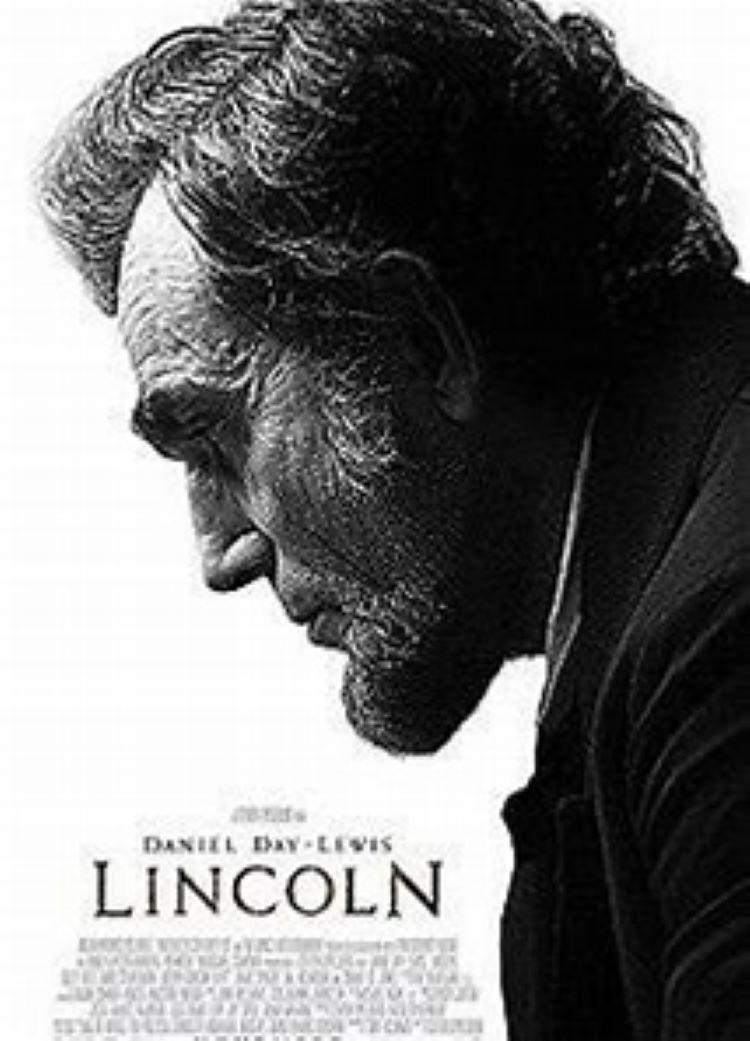
The film began shooting in Richmond Virginia, in October 2011. Day-Lewis spent a year in preparation for the role, a time he had requested from Spielberg. He read over 100 books on Lincoln, and and spent long hours with the make-up artist to achieve a physical likeness to Lincoln.
Adapting Lincoln’s voice throughout the entire shoot, Day-Lewis asked the British crew members who shared his native accent not to chat with him. Spielberg said of the actor’s mesmerising portrayal, “I never once looked the gift horse in the mouth. I never asked Daniel about his process. I didn’t want to know.” Lincoln received critical acclaim, especially for Day-Lewis’s performance. It also became a commercial success, grossing over $275 million worldwide.
In November 2012, he received the BAFTA Britannia Award for Excellence in Film. The same month, Day-Lewis featured on the cover of Time Magazine as the “World’s Greatest Actor”.
At the Golden Globe Awards , in January 2013, Day-Lewis won his second award for Best Actor, and the following month, he took home his fourth BAFTA Award for the Best Actor in a Leading Role. Soon after at the Academy Awards, Day-Lewis became the first three time recipient of the Best Actor Oscar for his role in Lincoln.
After a five-year hiatus, he returned to the screen to star in Paul Thomas Anderson’s historical drama Phantom Thread Set in 1950s London, Day-Lewis played an obsessive dressmaker, who falls in love with a waitress (played by Vicky Krieps).
Prior to the film’s release, on 20 June 2017, Day-Lewis’s announced that he was retiring from acting. Unable to give an exact reason for his decision, in an interview, Day-Lewis stated: “I haven’t figured it out. But it’s settled on me, and it’s just there ..”
9 years earlier, when he received the Academy Award for Best Actor from Helen Mirrenn, Day-Lewis knelt before her, and she tapped him on each shoulder with the Oscar statuette, to which he quipped, “That’s the closest I’ll come to ever getting a knighthood.”
He could not have been more wrong! In 2014 he was appointed a Knight Batchelor in the Birthday Honours for services to drama. Later that same year, he was knighted by Prince William, Duke of Cambridge, in an investiture ceremony at Buckingham Palace.