

HOLLYWOOD---“I’m overwhelmed!” Connie Francis was bubbling down the phone to me from her home in Florida. What’s happened is incredible!”
At 87, the legendary singer is enjoying an unexpected resurgence of popularity. All thanks to social media. Out of the blue, her 1962 song Pretty Little Baby has become a viral sensation on social media.
Last month on Tic Toc it streamed 2.4 million times, has had 10 billion TikTok views and reached No. 1 on their Viral 50 and Top 50 charts. And it recently racked up a whopping 14 million global streams, landing at No.67 on Spotify’s Global Top 100.
“I feel like I’ve been given a new lease on life,” Connie told me on the phone from her Florida home.
She learned the news from a friend in England who called to tell her the song had gone viral. “I said ‘what’s that?’” laughed Connie as she recalled their conversation. “He said ‘your song has gone viral on Tic Toc’ and I said ‘what does that mean?’ I never heard of it. I thought he was talking about a virus in my computer! I had no clue what he was talking about. That’s how out of touch I was.” A quick learner she now has her own Tic Toc page.
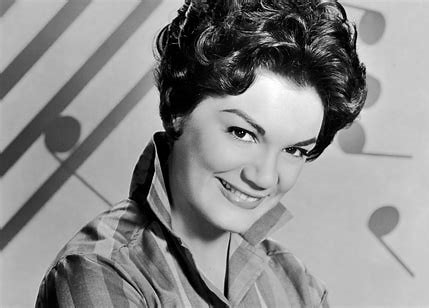
Since January, Pretty Little Baby has streamed more than 20 million times on the leading music website Spotify, been translated into several languages on a newly-released international album and is a hot number in France. All of which makes Connie, who’s currently wheelchair-bound while recovering from a hip problem, ecstatic.
“I’m so happy,” she bubbled“. I recorded it 63 years ago and now a new generation is hearing it. It’s absolutely amazing!”
But she admitted she was never crazy about the song. “It was one of my least favourite recordings! I actually put it on the B side of another song. I wanted something weak for the B side. So that was Pretty Little Baby.” She ended up recording it in seven languages.
That it’s become such a global hit is staggering. “Someone put it on Tic Toc and it spiraled from there. I don’t know who did it. I’ve been trying to get to know who did that so I can try to thank them personally but I can’t pinpoint exactly where it began and who started it. I’d love to find out.”
Connie’s career began in the ‘50s and with the phenomenal success of her chart-topping Who’s Sorry Now in 1957, she became a teen idol. Ironically she hadn’t wanted to record that song which became a million-dollar seller and she left it till the last recording of the session hoping they’d run out of time. But her business manager father insisted and wouldn’t let her leave till she’d done it. In 2001, it was named one of the ‘Songs of the Century’.
After that, Connie never looked back. Her photo became a regular sight smiling up from fan magazine covers. Songs such as Where the Boys Are, which became her signature song from the film in which she starred, and Stupid Cupid kept her high on the charts. Where the Boys Are was the first of her several movies and became one of the Top 10 Teen Films of all time. As for the million-selling title song, it topped the charts in 15 countries and six languages.
She was the first female singer ever to reach number 1 on the Billboard Hot 100 and the first female to have three no.1 hits on the charts. Fifteen more top ten hits followed including the classic Lipstick on my Collar.
By 1960 Connie Francis had become the world’s most successful female artist, and one of the first to record albums in several different languages, including Yiddish and Hebrew which she learned growing up in the midst of an Italian-Jewish neighbourhood in New Jersey surrounded by a coterie of Jewish friends.
For all the fame, she had a strict upbringing, referred to her father as a ‘vigilante’, was rarely allowed out on dates and lived at home till she was 29. She admits it was not a normal childhood. Her father was brilliant at selecting the right songs for Connie - ‘he was the architect of my career but he was a tyrant.’ After meeting Bobby Darin who wrote some songs for her, the couple embarked on a hot romance but it was constantly being thwarted by Connie’s father. When he learned that Darin had suggested to Connie that they elope after one of her shows, he chased the singer away at gunpoint. That was the end of their romance.
Later Connie went on to have four marriages but they all failed. She has always said Bobby Darin was the love of her life. Does she think of him often, I asked. She paused, then told me softly, almost in a whisper, “I think of him every day. I still love him.”
She has yet to see Just In Time, the musical which recently opened on Broadway based on Darin’s life. “As a matter of fact, I'm very disturbed about the fact that no one contacted me at all to ask me whether anything that they wrote was true or not. So I don’t know what the show is about. No one called me, not even a single phone call, before it was announced that Grace Lawrence would be portraying me in the show.”
I haven’t seen the show, I told Connie, but I’ve heard it does justice to the wonderful performer who was such an integral part of American pop culture. She fell silent for a moment, then reflected, “He wanted to be a legend, and he certainly is.”
Over several decades, Connie Francis has sold more than 200 million records worldwide and her iconic songs continue to be played today on music stations in dozens of countries. But despite her fame and success her life has been a rollercoaster.
While on tour In 1974, she was raped at knifepoint in a hotel room. She was so traumatised she didn’t work again for seven years, was hospitalized several times and became a recluse. Her father wrongly believing her to be bipolar and manic depressive had her committed no less than 16 times in mental hospitals. “I was put in restraints; they were supposed to be illegal as of 1958 but I was put in restraints. Not every time. But enough times.
“I attempted suicide in 1984 as a result of one of my stays in a mental institution. It destroys your soul. I was given shock treatments. They were very helpful. They lifted me right out of my depression and my memory was better after than it was before. I know that people typically lose some of their memory after shock treatment. But not in my case.”
Eventually correctly diagnosed with PTSD (post-traumatic stress disorder), she gradually took small steps back into life and devoted herself to helping trauma victims, particularly rape victims and war veterans. “In the Vietnam war there was no such thing as post traumatic stress disorder. So for any number of years, soldiers were going around thinking they were mentally ill and there was a stigma attached to any soldier suffering the effects of PTSD because post traumatic stress disorder hadn’t been given a name yet.”
She had actually begun supporting American troops as a child. “My father always impressed upon me how important it was to support our troops so when I was 10 years old I used to go to veterans’ hospitals and play my accordion and sing for them. Anywhere that was in driving distance of our home. I remember as a young child seeing amputees but I wasn’t frightened. It was heartening for me. I knew I was doing a good thing when I saw them smile and react to me.“
“I’ve always supported our troops – through Vietnam, Desert Storm, when they returned. I was head of UNICEF in my twenties. I was chairperson. UNICEF covered everything. Later on it covered the peace corps and covered care, a lot of benefits.”
Over the years Connie has worked tirelessly in support of veterans and has performed all over the world, including at military facilities like Guantanamo Naval Base. An especially memorable occasion came when she sang for the troops in Berlin. “I performed at the Berlin Wall about a month after it went up. It was spooky. We did go over to East Berlin, we were allowed to visit on a bus trip, and it was all dark and people were hunched over as if ...it looked like the end of the war. There was one street that was all decorated. It looked like the buildings were all constructed but behind the facade of the buildings, the homes were all decimated. All bombed out.”
Seeing the Berlin Wall was an intensely emotional experience for Connie. “I cried! I couldn’t believe it. I thought of all those masses yearning to be free. And I thought of our own Statue of Liberty. One interesting thing about that is years later when the Wall came down, on the East Berlin side there was a big sign that said ‘We Want Connie Francis’. I had recorded my songs in German and so there was a big sign painted on the Wall on the East Berlin side. It was on a newsflash and I’ve been trying for a long time to get a copy of it but haven’t been able to find it.”
Through the decades, Connie’s support for the troops has been endless, including giving concerts in war-ravaged areas like Korea and Vietnam. While a lot of performers bypassed Vietnam, she wasn’t one of them.
“There weren’t too many people going there,” she recalled. “Bob Hope went but he would fly in and do a show and stay at the Island Hilton. I wanted to go to the boondocks and find out what was really going on with that war. And the only way to do that was to go on my own with the USO, to go by myself. “So, in 1968, the 28-year old singer flew to Vietnam.
“I went to all of the hospitals first,” she told me. “These were hospitals, Barbra, that were set up within one hour and they could perform all kinds of surgeries except for neuro-surgery. Sometimes in 120 degrees heat and no walls...it was a mess! You’ve seen MASH. That’s what this was like. That’s where I went first because a lot of soldiers couldn’t get to see my show and they needed me most. And I’ve never felt more needed at any other time in my life as I did in Vietnam.”
When she performed for the troops there, the overwhelming reaction she received was something she’s never forgotten.
“It was wonderful. There was one night when, there was a famous general there, I think it was General Westmoreland and he asked me what songs I’d be singing that night and I told him I always close my shows with God Bless America. And he said ‘you can’t do that Connie. This company has seen a lot of casualties and these men are bitter, broken and they actually hate their country.’ I said ‘well they hate the administration that got them into this mess but as far as their country’s concerned my money’s on them.’ So I walked up to the microphone and without saying a word I began singing the first four lines of God Bless America. One lone soldier stood and put his hand over his heart and began to sing along with me. And then 10 followed and 100 and many more.”
She paused, still affected by the memory. “People have asked me for years what was the greatest event of my career. It was that night as I watched 25,000 American men with their hands over their hearts and tears falling from their eyes singing the praises of their country.
“I wanted to stay out there,” she reflected. “But we had been there 3 weeks and we’d visited 2, 3 places a day and my guitarist and drummer and piano player that I took with me were exhausted and it was Christmastime and they wanted to come home. So I had to come back. But I didn’t want to. And it took me 3 months to get over the ravages of what I’d seen there before I could sleep at night.”
Back home, she continued her efforts to support both the troops and victims of crime. In the ‘80s, she wrote to President Reagan, describing herself as ‘America's most famous crime victim’ and saying she wanted to help others who had suffered as she had after being raped several years earlier. He appointed her to the Attorney General's Task Force on Violent Crime. And in 2009 she became the national spokesperson for the government’s Mental Health America trauma campaign.
Several years ago, Connie and Gloria Estefan collaborated on a screenplay for a movie based on Connie’s life titled Who's Sorry Now? which Estefan announced she would produce and play the lead. But after endless disagreements, the project was abandoned. Estefan didn’t approve of the writers Connie wanted for the show and a disillusioned Connie walked away from the project. “They chose to use amateur writers to write the screenplay.”
Dolly Parton had also been wanting to produce her life story and they had discussions before that, too, fell by the wayside. “We had six false starts to make a movie of my life. Every one of them failed. So many things weren’t any good and several things failed to materialise.”
She laughed. “Now I get calls every day about doing my movie! But I don’t trust anyone after what I’ve experienced. So I really don’t know who to aspire to and who not to.“
Still, if a movie were to be made, I wondered who she would choose to portray her. “Lady Gaga!” she answered immediately. “I think she's got a great voice and she's a good actress!”
These days she’s thinking of condensing her magnificent 2017 memoir Among My Souvenirs. A remarkably candid anthology of stories and memorabilia, its 631 pages present a riveting read. I’ve had it on my coffee table since she gave it to me a few years ago and every now and then I go back and dip into the glossy wonderland of her past world. Connie is understandably proud of the book and hopes to increase its readership. “It can be bought on my website and if it’s condensed more people would be able to read it because it will be more affordable.”
In the meantime, she’s concentrating on recovering from a hip injury that has kept her in a wheelchair for the past three months. “I just went to physical therapy this morning and he said I should be walking again in the next two months. Then it will take me another couple of months after physical therapy. Today was only my second day so I've got a long road to home.”
But with Connie’s innate resilience, she’s bound to be up and walking again before long. And now that she’s become social media’s new wunderkind, we can look forward to more of her past hits being revived. The Connie Francis sound still reverberates over our airwaves and it’s here to stay.