
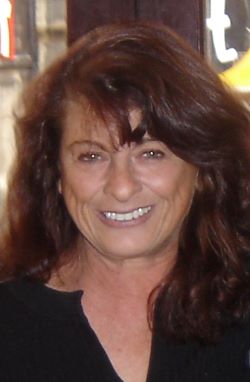
HOLLYWOOD, California….This turns out to be a week full of unique occasions, so I’m paying tribute to two very special ones that for me are the most notable.
ELLIOTT GOULD – 87
First and foremost, I want to wish the happiest of birthdays to my dear friend Elliott Gould who turns 87 today - and looks a good 20 years younger. Sharing some exciting and much-anticipated news, Elliott tells me there’s to be a fourth season of The Lincoln Lawyer in which he returns as former defense attorney ‘Legal’ Siegel, who is mentor and father figure to the main character, Mickey Haller.

(c) Photo by Barbra Paskin
Following the success of the 2011 film starring Matthew McConaughey based on Michael Connelly's bestselling books, The Lincoln Lawyer became a television series in 2022 on Netflix and has been their most popular show. A consistent number one hit for the channel, the new season should hit our screens early next year.
Elliott also confirms plans are moving ahead for Ocean’s 14, in which Brad Pitt and George Clooney will reappear, as hopefully will several other earlier members of the popular heist franchise which includes Elliott and Matt Damon. The group will reconvene to pull off another thrilling heist, despite Clooney’s recent musings to the New York Times that the criminals might all be ‘too old now to do the job’.
This is the time of year that Elliott relishes. The weeks leading up to Rosh Hashonah and the start of a new year. I remember one year he surprised me with a honey cake; the following year I reciprocated with one I’d made especially for him. I never told him it was the third one I’d made after the first two collapsed when the oven temperature stopped working properly.
Elliott’s embracing of Judaism came relatively late in life. That missing link was made a couple of decades ago and ever since he has recognised his Jewishness is a central part of his existence.
As Elliott Goldstein he grew up in the intrinsically Jewish neighbourhood of Brooklyn. His parents, Lucille and Bernie, were American; his grandparents, orthodox Jews from the Ukraine and Poland.
He admits that even though his mother lit the Shabbas candles every week, he never had strong connections to Judaism through the greater part of his life, though he always cherished being a Jew.
"We lived more of a secular existence, although my father and my mother would observe the holidays, observe the High Holy days, observe Passover, Chanukah. Even though young, I was aware that there was more to it than just that.
"We used to go to my Uncle Louie for seder nights and I remember being panicked by having to read the Ma Nishtanah at Pesach. It caused me a lot of stress. It wasn’t a matter of failing, but I had no confidence.
"I went to Hebrew school in Brooklyn and I was barmitzvah’d in 1951 but I didn’t really know or understand very much.”
He paused, then nodded. “Now I understand. It’s very important to me and I’m so very proud to be a Jew. The feeling grew stronger as I got older and started considering why we were put on this earth.”
In his vast body of work, Elliott has played a huge number of overtly Jewish characters. From deli owners and schoolteachers to rabbis and theatrical moguls. He was once cornered in the street by Topol urging him to play the part of Tevye in the London production of Fiddler on the Roof, a role he had already turned down.
When not working, he has devoted much of his time to studying the Torah. He is a favourite student of some of Los Angeles' most eminent rabbis and a friend of Chabad and the Lubavitchers. "I'm an unorthodox Jew in the way I live but I have a deeply felt reverence for the ultra-Orthodox," he’s told me.
So what does it mean to him to be a Jew, I asked.
"I just accept it,” he told me softly. “My trips to Israel remind me that there you're free to be a Jew and it's great to be free to be a Jew. I like to be free to be what I am. I find that in this world there's very little that I can depend on. There's almost nothing. But I really appreciate - and not to be pretentious - the law, the Torah."
I have a new oven now. So hopefully I’ll be able to present Elliott with another honey cake for the New Year. And maybe accompany it with a tub of his favourite icecream.
*********
JAWS – AT 50
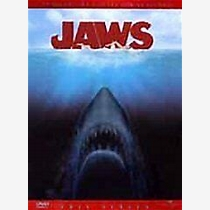
(c) Photo from Thriftbooks
Where were you in the summer of 1975? Lapping up some rare sun on Brighton Beach? Enjoying a dip in the cool ocean? Or were you one of those too terrified to go into the water for fear of encountering sharks?
The iconic film that had such a frightening effect worldwide was of course the inimitable Jaws, now celebrating its 50th anniversary. And in a nod to its memorable status, the newly-restored film is being re-released in cinemas today (29th) for one week only. It was a phenomenal and instant success and worldwide has grossed $1.5 billion (adjusted for inflation). It redefined the film industry: it was the first time a film was widely released in the notoriously slow summer months and was the first film to make $100 million in America. For three years it was the highest-grossing film in history until Star Wars took over that spot.
The movie about killer great white sharks terrorising beachgoers was so realistic that hundreds of thousands of people became too afraid to go into the ocean for fear of encountering one. Richard Dreyfuss, one of the stars of the film, admits when he saw the rough cut he was so terrified himself that he never again went back into the sea.
But the filming of Jaws was notoriously difficult - it was submerged in endless technical problems with the three mechanical sharks (nicknamed ‘Bruce’ after Spielberg’s lawyer), challenging weather conditions and the decision to film extensively in the sea surrounding Martha’s Vineyard on America’s East Coast. All of which led to going drastically over schedule by months and massively over budget to more than twice the original projection.
Shooting in the ocean was much harder than anticipated. Rough seas, strong winds, and heavy rain caused delays, damaged equipment, and made it difficult to maintain stable shots.
Steven Spielberg, then 27, was relatively inexperienced having made only one other big screen feature at the time. He faced immense pressure and doubts about his ability to handle the project and even considered leaving the film at one point.
The mechanical sharks were notoriously unreliable, especially in saltwater, and frequently broke down or sank, forcing Spielberg to change his approach and - in an homage to Hitchcock, his hero - rely more on suspense and suggestion rather than directly showing much of the shark. It paid off in a big way, creating a suspense which had audiences gripping the edge of their seats. For all of the fear it generates, in total the shark only gets four minutes of actual screen time.
Despite the hardships, the challenges ultimately contributed to the film becoming a cinematic masterpiece. The need to adapt to the malfunctioning shark led to a more suspenseful and psychological horror experience. Over 67 million people in the U.S. went to see the film when it was initially released - just under a third of the country's total population at the time - making it the first summer ‘blockbuster’.
Spielberg has been vocal about the difficulties he faced during the production of the film. The stress of working on it plagued him for years afterwards. ‘I would wake up in a sweat at three in the morning ten years later because I thought I was still making the movie’.
In the introduction to National Geographic’s new documentary, Jaws @50: The Definitive Inside Story, he relates the nightmare shoot. ‘In most circumstances, summer in the Vineyard is a dream. But when you are over budget and over schedule and when I am over my head, that summer of 1974 was a bad dream before it ever became the dream of a lifetime.’
With the slew of production delays and budget issues, he fretted about being sacked. But whenever he discussed the possibility, he said most of the crew was happy about it – ‘this wasn’t a labor of love for anybody. This was a physically impossible chore and people wanted to go home. Jaws was a fun movie to watch, but not a fun movie to make. It was made under the worst of conditions’.
The first time I interviewed Spielberg was in his office at Universal studios shortly after the film’s release. He was sitting at his desk in front of a giant Jaws poster on the wall behind him.
Despite a couple of earlier television features, he had only made his theatrical debut the year before with the Goldie Hawn starrer The Sugarland Express. I asked him about his initial reaction to the overwhelming first days of Jaws’ release.
“It was awesome when it first happened,” he admitted. “I was surprised it was such an overnight sensation. The best you hope for in Hollywood is for a film to start pretty good and then get better the 2nd and 3rd weeks, maybe drop a bit then perhaps go higher to $7 or $8m. For a film to have made $7-1/2 m in the first three days was shocking! I completely forgot I'd made the picture at that point. I read the newspapers and saw the figures they reported and said 'my God!'. Then right after saying that, I realised that it was I who had made this picture! It was a shock, it really was!
“Why did I want to do it?” he pondered. “I had an experience with the book, with the novel in the privacy of my home. I screamed in the night by myself with no-one around! And I thought 'if portions of the novel could get me out of bed at 3 in the morning then this might be a good movie to share with a couple of million people’. I also knew it would make a very exciting movie. A high adventure film. I wasn’t looking to make that movie at the time. I was planning to make another film and I was already in pre-production when I read the script. That’s where I changed my life. I dropped everything to do Jaws.”
Two years after its historical impact on cinema and the world’s ocean-going public, I flew to Pensacola in Florida to film a location story about the making of Jaws 2 for Barry Norman’s weekly BBC-TV programme. I interviewed the leading actors and director Jeannot Schwarz but never once caught sight of the shark itself. As it had done in the original film, memories of which still haunted Spielberg, it kept sinking. Compensating for the lost sighting, my trip marked the first time I’d ever seen pure white sand, for which Pensacola is famed. When I awoke the morning after I arrived and looked out of the window, I thought I was staring at snow that covered the beach. But ten years later I did finally get to see the shark – one of them – up close.
In 1987 I flew to the Bahamas’ location of Jaws: The Revenge with my crew to capture some of the filming for the BBC.
The movie was the fourth and final installment in the series. But unlike its predecessors, it was panned from the outset because of its unrealistic special effects and inane plot that suggested the titanic mammal possessed telepathic abilities. It was later dubbed by many critics as the worst film ever made.
Michael Caine, who has since called it one of the worst movies of his career, was paid $1.5 million for two weeks’ work. He said he did the movie primarily for the money which he used to buy a house for his mother.
At the time, he was in the middle of an acting dry spell and excited to bring his family along for a Caribbean holiday. But the filming meant he had to miss that year’s Academy Awards - at which he won his first Oscar for Best Supporting Actor for Hannah and Her Sisters.
In between shots and endless sighs as we watched the shark continuously sink beneath the fairly placid azure water, Michael explained what had attracted him to the film.
“I thought it would be fun for me to do because I never do films like this and the script was fun,” he enthused. “And Jaws is a part of movie history. Spielberg’s film was one of the all-time great thrillers and I thought it would be nice to be mixed up with that. Plus the fact that we’re in Nassau which I love and I come here on my own for holidays. As a matter of fact, the hotel where we’re staying now was the first hotel I ever stayed in here 25 years ago. It was January in England and raining, so I thought I’d have a little holiday and go to the sunshine. I had a great time here. Same thing now. It’s been great fun and I’m having a lovely time.
“I play a veteran island-hopping pilot who takes people from island to island to get away from the shark. And in the end the shark eats my airplane. He’s about 30ft long and weighs 3 tons. There’s machinery inside and his eyes follow you, it’s the first one that has eyes that move so it’s rather scary.
“I never get nervous when I’m acting. But I’m nervous about physical things,” he admitted. “The other day I had to crash my 4-seater plane on top of the shark and believe me, that made me VERY nervous!”
I reminded him of the effect the first Jaws had on people staying away from the ocean. After that, beach tourism declined more than 20% . People who saw the movie as a kid still refuse to enter ocean waters as an adult.
Michael didn’t hesitate. “I think this one will keep people out of the water like the first one did! Jaws frightened me out of the water too. Oh yeah! I was very nervous about the water for a while after that. They said during the entire making of Jaws they never saw one shark. And when we put our shark in the water down here I’m sure it frightened all the local sharks away. So I’m not too worried anymore.”
That’s all for now. Till next time, Shavuatov.
ends